

Understanding Neuroplasticity: How Your Brain Rewires Itself
Introduction
For decades, scientists believed the adult brain was fixed and unchangeable. Once you reached adulthood, the thinking went, your neural connections were set in stone. Today, we know this couldn’t be further from the truth. The discovery of neuroplasticity has revolutionized our understanding of the brain, opening up incredible possibilities for learning, recovery, and personal growth.
What Is Neuroplasticity?
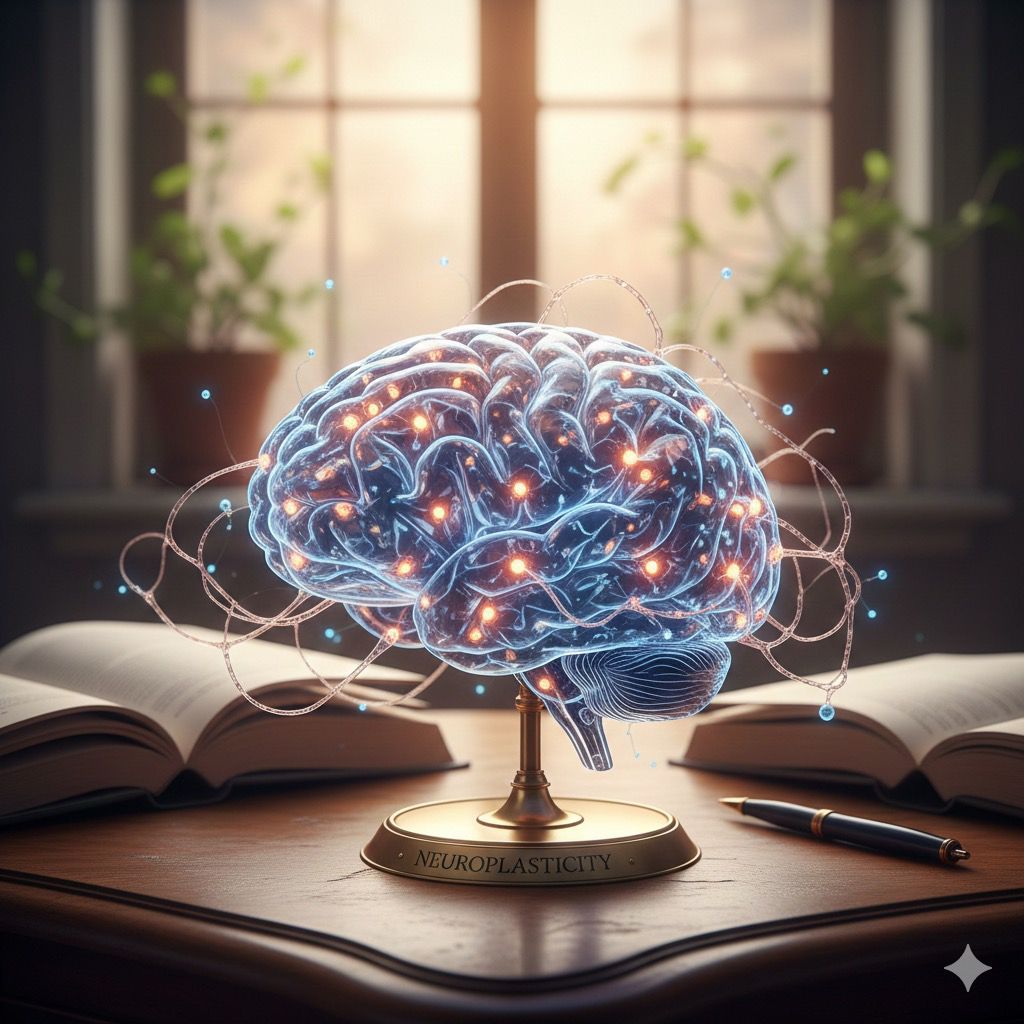
Neuroplasticity, also known as brain plasticity or neural plasticity, refers to the brain’s remarkable ability to reorganize itself by forming new neural connections throughout one’s lifetime. This adaptive capacity allows the neurons (nerve cells) in your brain to adjust their activities in response to new situations, environmental changes, or changes in behavior.
Think of your brain as a living network of pathways. When you learn something new or repeat an action, you strengthen certain pathways while others that aren’t used may weaken. This constant rewiring process happens at multiple levels, from individual neurons to complete circuits and throughout entire brain regions.
The Two Main Types of Neuroplasticity
Structural plasticity involves physical changes in the brain’s structure. This includes the growth of new neurons (neurogenesis), the formation of new synapses (the connections between neurons), and even changes in the density of gray matter in different brain regions.
Functional plasticity refers to the brain’s ability to move functions from damaged areas to undamaged areas. This is particularly important after brain injury or stroke, when healthy parts of the brain can sometimes take over functions that were previously handled by damaged regions.
How Does Neuroplasticity Work?
At the cellular level, neuroplasticity happens through several mechanisms. When you repeatedly use specific neural pathways, the connections between those neurons become stronger through a process called long-term potentiation. The phrase “neurons that fire together wire together” captures this concept perfectly.
Conversely, connections that aren’t used regularly become weaker through long-term depression. This synaptic pruning is just as important as creating new connections, as it helps your brain become more efficient by eliminating unnecessary pathways.
Your brain also generates new neurons in certain areas, particularly the hippocampus, which plays a crucial role in learning and memory. This neurogenesis continues throughout your life, though it typically slows with age.
Real-World Examples of Neuroplasticity
The evidence for neuroplasticity appears everywhere once you know what to look for. London taxi drivers, who must memorize thousands of streets, show enlarged hippocampi compared to other people. Musicians who practice extensively develop enhanced connections in areas related to motor control and auditory processing.
Stroke survivors often demonstrate remarkable recovery through the process of neuroplasticity. With proper rehabilitation, many patients regain abilities that seemed permanently lost as their brains create new pathways to bypass damaged areas. Similarly, people who lose one sense often experience enhanced abilities in their remaining senses as the brain reallocates resources.
Even everyday activities like learning a new language, picking up a musical instrument, or developing a new skill at work trigger neuroplastic changes in your brain.
Factors That Enhance Neuroplasticity
Several factors can promote brain plasticity and support healthy neural adaptation:
- Learning and novelty: Engaging with new experiences and information stimulates neural growth. Challenging your brain with unfamiliar tasks creates the conditions for new connections to form.
- Physical exercise: Regular aerobic activity increases blood flow to the brain and promotes the release of growth factors that support neuron health and the formation of new neural connections.
- Sleep quality: During sleep, your brain consolidates memories and strengthens the neural pathways formed during waking hours. Adequate rest is essential for effective neuroplastic changes.
- Nutrition: A diet rich in omega-3 fatty acids, antioxidants, and other brain-healthy nutrients supports neural health and plasticity.
- Mental stimulation: Activities like reading, puzzles, learning new skills, and social interaction all encourage neuroplastic adaptation.
- Mindfulness and meditation: Research shows that regular meditation practice can lead to measurable changes in brain structure, particularly in areas related to attention and emotional regulation.
The Limits of Neuroplasticity
While neuroplasticity is powerful, it’s not unlimited. The brain’s ability to rewire itself decreases with age, though it never disappears entirely. Critical periods exist during childhood when the brain is especially plastic and receptive to certain types of learning.
Additionally, not all brain damage can be overcome through neuroplasticity. The extent of recovery depends on factors like the severity and location of injury, the timing of intervention, and individual differences in brain structure and health.
Practical Applications for Your Life
Understanding neuroplasticity empowers you to take an active role in shaping your brain. Whether you’re recovering from injury, looking to break bad habits, or simply wanting to learn new skills, you can harness your brain’s plasticity.
Start by embracing lifelong learning. Take up new hobbies, learn languages, or explore subjects outside your comfort zone. Practice consistently, as repetition strengthens neural pathways. Maintain a healthy lifestyle by engaging in regular exercise, getting sufficient sleep, and consuming a balanced diet. Challenge yourself mentally while also managing stress, which can inhibit neuroplastic processes.
Conclusion
Neuroplasticity reveals that your brain is far more adaptable than anyone once imagined. Throughout your life, your experiences literally reshape the physical structure of your brain. This isn’t just fascinating science; it’s empowering knowledge that puts you in the driver’s seat of your own neural development. By understanding and leveraging neuroplasticity, you can optimize learning, support recovery, and continue growing at any age.